<div className="border border-blue-100 bg-blue-50/40 rounded-2xl p-6 my-8">
<div className="flex items-center gap-2.5 mb-3 text-blue-800">
<svg className="w-5 h-5 text-blue-600 inline-block align-middle mr-2" fill="none" stroke="currentColor" strokeWidth="2.5" viewBox="0 0 24 24" xmlns="http://www.w3.org/2000/svg"><circle cx="12" cy="12" r="10"/><circle cx="12" cy="12" r="6"/><circle cx="12" cy="12" r="2"/></svg>
<h3 className="font-bold text-base m-0">頁首情境定位與分流</h3>
</div>
<div className="text-slate-600 text-sm leading-relaxed mb-4">
房地產交易與契約細節深度解析,助您掌握交易關鍵,規避潛在法律與財務風險。
</div>
<div className="grid grid-cols-1 sm:grid-cols-2 gap-4 pt-4 border-t border-slate-100 text-xs">
<div>
<span className="font-semibold text-slate-700"><svg className="w-4 h-4 text-rose-500 inline-block align-middle mr-1.5" fill="none" stroke="currentColor" strokeWidth="2.5" viewBox="0 0 24 24" xmlns="http://www.w3.org/2000/svg"><circle cx="12" cy="12" r="10" /><circle cx="12" cy="12" r="6" /><circle cx="12" cy="12" r="2" /></svg>適合讀者:</span>
<ul className="list-disc pl-4 mt-1 text-slate-500 space-y-1">
<li>進行購屋流程評估與契約簽署的置產人及首購族</li>
<li>研究交易與持有實務與交易防線的法務人員</li>
<li>欲防範購屋流程爭議與合約陷阱之房屋所有權人</li>
</ul>
</div>
<div>
<span className="font-semibold text-slate-700"><svg className="w-4 h-4 text-blue-500 inline-block align-middle mr-1.5" fill="none" stroke="currentColor" strokeWidth="2" viewBox="0 0 24 24" xmlns="http://www.w3.org/2000/svg"><path d="M10 13a5 5 0 0 0 7.54.54l3-3a5 5 0 0 0-7.07-7.07l-1.72 1.71" /><path d="M14 11a5 5 0 0 0-7.54-.54l-3 3a5 5 0 0 0 7.07 7.07l1.71-1.71" /></svg>姊妹篇引導:</span>
<ul className="list-disc pl-4 mt-1 text-slate-500 space-y-1">
<li>關於本專題的延伸實務防線?請讀 <a href="/blog/taiwan-home-buying-guide" className="text-blue-600 hover:underline">首購族自保特約SOP</a></li>
<li>關於本專題的進階契約對照?請讀 <a href="/blog/new-house-buying-guide" className="text-blue-600 hover:underline">新屋合約四大防禦線</a></li>
</ul>
</div>
</div>
</div>
<div className="text-lg text-slate-600 leading-relaxed mb-6 font-medium">
「TWProbe 編輯部」指出,許多屋主在老屋翻新時投入大筆裝潢預算更換頂級氣密窗,深夜卻依然聽得到高架橋車流與鄰居交談聲。氣密窗的降噪效益是一門精密計算的工程,只要泥作嵌縫或玻璃規格出現錯置,防線就會全面崩潰。本文將從物理聲學角度,為您拆解 3 大核心隔音指標。
</div>
<div className="not-prose bg-slate-50 border border-slate-200 rounded-xl p-5 my-8 shadow-sm">
<div className="flex items-center gap-2 mb-3 text-slate-800">
<svg className="w-5 h-5 text-blue-600" fill="none" stroke="currentColor" viewBox="0 0 24 24"><path strokeLinecap="round" strokeLinejoin="round" strokeWidth="2" d="M12 6.042A8.967 8.967 0 006 3.75c-1.052 0-2.062.18-3 .512v14.25A8.987 8.987 0 016 18c2.305 0 4.408.867 6 2.292m0-14.25a8.966 8.966 0 016-2.292c1.052 0 2.062.18 3 .512v14.25A8.987 8.987 0 0018 18a8.967 8.967 0 00-6 2.292m0-14.25v14.25"></path></svg>
<strong className="text-lg">30 秒精華速讀</strong>
</div>
<ul className="space-y-2 text-slate-700">
<li className="flex items-start gap-2">
<span className="mt-1.5 w-1.5 h-1.5 rounded-full bg-blue-500 shrink-0"></span>
<div><strong className="text-slate-900">檢視環境噪音基期</strong>:都市主要幹道尖峰噪音約達 85 分貝,夜間睡眠標準需低於 40 分貝,隔音設備必須具備阻絕 45 分貝以上的綜合能力。</div>
</li>
<li className="flex items-start gap-2">
<span className="mt-1.5 w-1.5 h-1.5 rounded-full bg-blue-500 shrink-0"></span>
<div><strong className="text-slate-900">破除玻璃越厚越好迷思</strong>:針對高架橋的低頻車流噪音,具備 PVB 隔音膜的「膠合玻璃」實質降噪效果優於相同厚度的中空複層玻璃。</div>
</li>
<li className="flex items-start gap-2">
<span className="mt-1.5 w-1.5 h-1.5 rounded-full bg-blue-500 shrink-0"></span>
<div><strong className="text-slate-900">泥作嵌縫是致命破口</strong>:若窗框與牆體之間的填補不確實,或氣密條老化硬化,將造成側向漏音,使隔音效能大幅下降。</div>
</li>
</ul>
</div>
## 一、為什麼換了氣密窗還是吵?先釐清「氣密」與「隔音」
若套用 TWProbe 不動產智庫的獨家資產防禦模型來進行壓測分析,這通常源自於消費者對建材名詞的認知落差。市場上常見的說法認為,只要窗戶能擋風擋雨,就一定能擋住聲音。然而工程現實是,「氣密」阻擋的是流動的空氣,「隔音」阻隔的則是震動的聲波。
聲音的傳遞就像水流,會本能地尋找阻力最小的縫隙鑽入。一扇氣密性極佳的窗戶,若其玻璃材質無法吸收聲波震動,或是窗框與牆壁之間存在微小孔洞,噪音依然會長驅直入室內。因此,評估降噪效益必須將這兩項指標分開檢視。
## 二、決定降噪效果的 3 大核心指標
### 指標一:看懂 STC 與 Ts 隔音值
<div className="not-prose flex items-start gap-4 bg-slate-50 border border-slate-200 rounded-xl p-5 my-8">
<div className="flex-shrink-0 bg-white border border-slate-200 rounded-lg p-2 shadow-sm">
<svg className="w-6 h-6 text-slate-600" fill="none" stroke="currentColor" viewBox="0 0 24 24"><path strokeLinecap="round" strokeLinejoin="round" strokeWidth="2" d="M12 6.253v13m0-13C10.832 5.477 9.246 5 7.5 5S4.168 5.477 3 6.253v13C4.168 18.477 5.754 18 7.5 18s3.332.477 4.5 1.253m0-13C13.168 5.477 14.754 5 16.5 5c1.747 0 3.332.477 4.5 1.253v13C19.832 18.477 18.247 18 16.5 18c-1.746 0-3.332.477-4.5 1.253"></path></svg>
</div>
<div>
<h4 className="text-base font-bold text-slate-900 mb-1">【專有名詞解析】STC 隔音等級 (Sound Transmission Class)</h4>
<div className="text-sm text-slate-600 leading-relaxed">
<strong className="text-slate-800">實務工程影響:</strong>STC 與台灣 CNS 的 Ts 等級是指一扇窗戶在實驗室中能阻擋多少「分貝」的物理指標。這代表一扇 Ts-40 窗戶「僅能減少」 40 分貝,若戶外 85 分貝,室內仍會有 45 分貝,無法達到絕對的無聲。
</div>
</div>
</div>
台灣現行 CNS 8466 規範將隔音性分為 Ts-25、Ts-30、Ts-35、Ts-40 四個等級。數字越大,代表阻絕聲音的能力越強。消費者常誤以為安裝最高等級的 Ts-40 氣密窗,室內就會變成無聲的真空狀態,這是不符合物理現實的預期。
<figure className="my-8 flex flex-col items-center">
<div className="w-full max-w-3xl overflow-hidden rounded-xl border border-slate-200 shadow-sm" dangerouslySetInnerHTML={{ __html: "<svg xmlns=\"http://www.w3.org/2000/svg\" viewBox=\"0 0 800 400\" style=\"background-color: #FFFFFF; font-family: sans-serif;\"><rect width=\"800\" height=\"400\" fill=\"#FFFFFF\"/><text x=\"400\" y=\"40\" font-size=\"22\" font-weight=\"bold\" fill=\"#1E293B\" text-anchor=\"middle\">CNS 國家標準 Ts 隔音等級與環境噪音對照表</text><text x=\"40\" y=\"320\" font-size=\"14\" fill=\"#64748B\" text-anchor=\"middle\">安靜</text><text x=\"40\" y=\"100\" font-size=\"14\" fill=\"#64748B\" text-anchor=\"middle\">吵雜</text><rect x=\"100\" y=\"80\" width=\"120\" height=\"250\" fill=\"#DBEAFE\"/><text x=\"160\" y=\"110\" font-size=\"20\" font-weight=\"bold\" fill=\"#0F172A\" text-anchor=\"middle\">85 dB</text><text x=\"160\" y=\"135\" font-size=\"14\" fill=\"#475569\" text-anchor=\"middle\">高架橋/臨街</text><path d=\"M 230 205 L 290 205\" stroke=\"#334155\" stroke-width=\"2\" stroke-dasharray=\"5,5\"/><polygon points=\"290,200 300,205 290,210\" fill=\"#334155\"/><text x=\"265\" y=\"195\" font-size=\"14\" font-weight=\"bold\" fill=\"#2563EB\" text-anchor=\"middle\">-30 dB (Ts-30)</text><rect x=\"320\" y=\"190\" width=\"120\" height=\"140\" fill=\"#93C5FD\"/><text x=\"380\" y=\"220\" font-size=\"20\" font-weight=\"bold\" fill=\"#0F172A\" text-anchor=\"middle\">55 dB</text><text x=\"380\" y=\"245\" font-size=\"14\" fill=\"#475569\" text-anchor=\"middle\">仍會干擾睡眠</text><path d=\"M 450 245 L 510 245\" stroke=\"#334155\" stroke-width=\"2\" stroke-dasharray=\"5,5\"/><polygon points=\"510,240 520,245 510,250\" fill=\"#334155\"/><text x=\"485\" y=\"235\" font-size=\"14\" font-weight=\"bold\" fill=\"#2563EB\" text-anchor=\"middle\">-40 dB (Ts-40)</text><rect x=\"540\" y=\"230\" width=\"120\" height=\"100\" fill=\"#3B82F6\"/><text x=\"600\" y=\"260\" font-size=\"20\" font-weight=\"bold\" fill=\"#FFFFFF\" text-anchor=\"middle\">45 dB</text><text x=\"600\" y=\"285\" font-size=\"14\" fill=\"#FFFFFF\" text-anchor=\"middle\">接近睡眠標準</text><line x1=\"80\" y1=\"330\" x2=\"680\" y2=\"330\" stroke=\"#334155\" stroke-width=\"2\"/><line x1=\"80\" y1=\"280\" x2=\"680\" y2=\"280\" stroke=\"#EF4444\" stroke-width=\"2\" stroke-dasharray=\"4,4\"/><text x=\"730\" y=\"285\" font-size=\"14\" font-weight=\"bold\" fill=\"#EF4444\" text-anchor=\"middle\">室內睡眠標準 (40dB)</text></svg>" }} />
<figcaption className="text-center text-sm text-slate-500 mt-3">▲ 各項 Ts 隔音等級套用於實際都市環境背景噪音後的殘留分貝數值。</figcaption>
</figure>
### 指標二:玻璃厚度怎麼選?膠合與複層玻璃的物理差異
許多人為了阻絕車聲,會選擇中央抽真空或灌入惰性氣體的複層玻璃。然而,複層玻璃的主要優勢在於「阻斷熱能傳導」,而非對抗低頻噪音。針對公車引擎聲、輪胎摩擦聲等低頻噪音,複層玻璃容易產生「質量-空氣-質量共振效應」,導致在特定低頻段的隔音值大幅下降。
相反地,在兩片玻璃中間夾入 PVB 樹脂膜的「膠合玻璃」,其 PVB 膜就像汽車的避震器,能有效吸收並轉換聲波的震動能,達到更優異的降噪效果。
<div className="not-prose overflow-x-auto my-8 border border-slate-200 rounded-xl shadow-sm">
<table className="w-full text-left border-collapse min-w-[700px]">
<thead>
<tr className="bg-slate-50 border-b border-slate-200 text-slate-700">
<th className="p-4 font-bold whitespace-nowrap w-1/5">玻璃種類</th>
<th className="p-4 font-bold text-slate-800 w-1/4">主要優勢</th>
<th className="p-4 font-bold text-red-600 w-1/4">噪音防禦弱點</th>
<th className="p-4 font-bold text-blue-700 w-1/3">適用情境</th>
</tr>
</thead>
<tbody className="divide-y divide-slate-100 bg-white text-slate-800 text-sm md:text-base">
<tr className="hover:bg-slate-50 transition-colors">
<td className="p-4 font-bold text-slate-900">複層中空玻璃</td>
<td className="p-4 text-slate-600">隔熱、保溫效果極佳,能有效防止室內結露。</td>
<td className="p-4 text-red-600 font-medium">對低頻交通噪音易產生共振,導致隔音破口。</td>
<td className="p-4 text-slate-700">需阻擋西曬熱能,且戶外無低頻車流噪音的環境。</td>
</tr>
<tr className="hover:bg-slate-50 transition-colors">
<td className="p-4 font-bold text-slate-900">膠合玻璃</td>
<td className="p-4 text-slate-600">防爆裂,PVB 膜能極高效吸收低頻震動能。</td>
<td className="p-4 text-red-600 font-medium">隔熱阻溫效果不如複層中空玻璃。</td>
<td className="p-4 text-slate-700">緊鄰高架橋、主要幹道,急需解決噪音干擾的環境。</td>
</tr>
</tbody>
</table>
</div>
### 指標三:窗框五金與泥作嵌縫密合度
即使選用了最高規格的膠合玻璃,若窗扇關閉時無法完全逼緊,聲音依然會從縫隙洩漏。氣密窗並非一勞永逸的工程,氣密條會隨著長期日照與溫差產生質變。通常在安裝 5 至 8 年後,橡膠會開始硬化萎縮,這將導致漏氣量增加,使整體隔音性能下降。
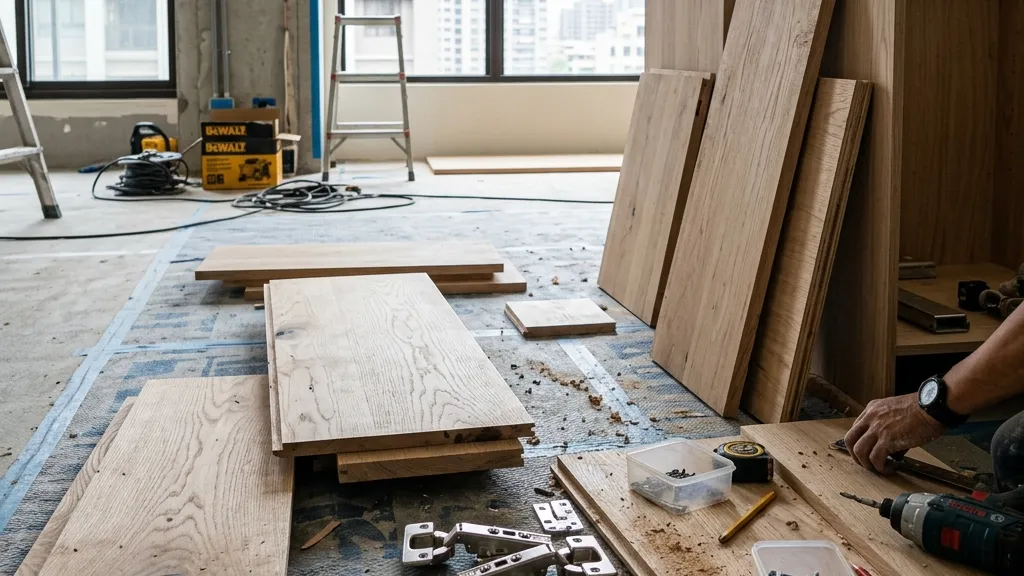
當舊窗拆除、新窗框立上去後,若泥作師傅的「嵌縫」作業不確實,水泥砂漿沒有填滿孔洞,不僅會成為隔音的致命破口,日後更可能引發滲漏水。一旦發生漏水,單樘窗戶的裝潢重置修繕成本極高。
<figure className="my-8 flex flex-col items-center">
<img src="/images/blog/airtight-window-sound-insulation-guide_window-frame-mortar-sealing-process-1024x572.webp" alt="泥作師傅正在進行氣密窗框與牆體間的嵌縫作業,確保沒有空隙。" className="rounded-lg w-full h-auto shadow-sm border border-slate-200" />
<figcaption className="text-center text-sm text-slate-500 mt-3">▲ 泥作嵌縫若不確實留下孔洞,再昂貴的氣密窗也無法發揮隔音效益。</figcaption>
</figure>
## 三、常見問題解析 (FAQ)
#### Q: :氣密窗可以直接裝在舊的窗框上嗎?
<strong>可以,但隔音效能會打折。</strong>這在工程上稱為「包窗工法」(乾式施工),適合不想動用泥作的屋主。但若原有的舊窗框與牆體內部本身就存在漏音孔洞,其隔音效能將大幅下降,建議仍以濕式施工(拆除重新泥作嵌縫)為佳。
#### Q: :換氣密窗需要向政府申請室內裝修許可嗎?
<strong>否,通常免辦理。</strong>單純更換氣密窗並不屬於建築物室內裝修管理辦法所定義的行為。但若施工涉及變更開口尺寸或影響大樓外觀立面,則必須事先取得管委會同意。
#### Q: :裝了頂級氣密窗,但家裡還是有低頻嗡嗡聲怎麼辦?
<strong>是的,低頻結構傳音無法單靠氣密窗阻絕。</strong>若窗戶已達 Ts-40 隔音等級,殘留的低頻聲通常來自於大樓水泵馬達或管道間共鳴。這類低頻聲波是透過 RC 結構直接傳遞,必須從音源處加裝減震墊來進行防禦。
## 四、實戰防坑檢核表 (Checklist)
- `[ ]` <strong>測量噪音基期</strong>:簽約前務必在深夜與尖峰時段,於窗戶邊緣利用分貝計 APP 測量真實環境噪音。
- `[ ]` <strong>確認玻璃厚度</strong>:若鄰近高架橋或主要幹道,務必指定採用含有 PVB 隔音膜的「膠合玻璃」。
- `[ ]` <strong>確認施工細節</strong>:合約上必須載明「確實進行泥作嵌縫」與「外牆防水塞水路」,避免側向漏音。
- `[ ]` <strong>索取出廠證明</strong>:要求廠商提供氣密窗品牌的 CNS 檢驗報告(如 Ts 隔音值、漏氣量等級)。
<strong>權威資料來源</strong>:[環境部(噪音管制標準)](https://oaout.moenv.gov.tw/law/)
## 官方查證系統資源
- <strong>[內政部不動產資訊平台](https://pip.moi.gov.tw)</strong>
*用途:查詢各都會區住宅房價指數、空屋率及住宅存量統計,客觀評估房產保值性。*